


If you lived your life entirely through push notifications in 2025, you probably think the world is crumbling. Bad news travels fast – it keeps you clicking. But if you look at the hard facts and real numbers, a different picture appears.
While the world was distracted by noise, 2025 was quietly one of the most important years for human progress. We broke barriers in genetics, stopped relying so much on coal, and even got rival nations to sign peace treaties.
Here are 10 real reasons to be optimistic about where we are heading, based on the science and data of the last 12 months.
1. The "Untreatable" Genetic Barrier Was Broken
For decades, a genetic diagnosis for rare diseases was often a death sentence. In 2025, it became a solvable engineering problem. At the Children’s Hospital of Philadelphia, doctors used a custom-made gene-editing therapy to cure an infant of a fatal metabolic disorder called CPS1 deficiency.
This wasn't a normal drug trial. They mapped the baby's DNA, built a cure just for him, and treated him within six months. The child, who would have previously faced severe brain damage, is now thriving. We have officially entered the era where we can "program" cures for individual people.
2. Cancer Vaccines Are Actually Working
The mRNA technology that saved us during the pandemic has found a new job: fighting cancer. In 2025, results from Memorial Sloan Kettering showed that a personalized mRNA vaccine for pancreatic cancer – one of the deadliest kinds – kept 75% of patients cancer-free three years later.
Perhaps even more surprising? Researchers at MD Anderson discovered that standard COVID-19 vaccines actually prime the immune system to fight cancer better, doubling the survival rate for certain patients on immunotherapy.
3. The Energy Tipping Point: Solar Beat Coal

The old argument that "developing nations need coal to grow" died in 2025. India, the world's most populous nation, saw its coal capacity drop below 50% of its total energy mix for the first time in history.
Why? Money. It is now cheaper to build huge solar farms than to burn coal. Meanwhile, China is projected to have installed nearly 70% of the world's wind power this year, effectively peaking its emissions years ahead of schedule. Going green is no longer just about charity; it's about smart business.
4. We Opened a High-Def Window to the Universe
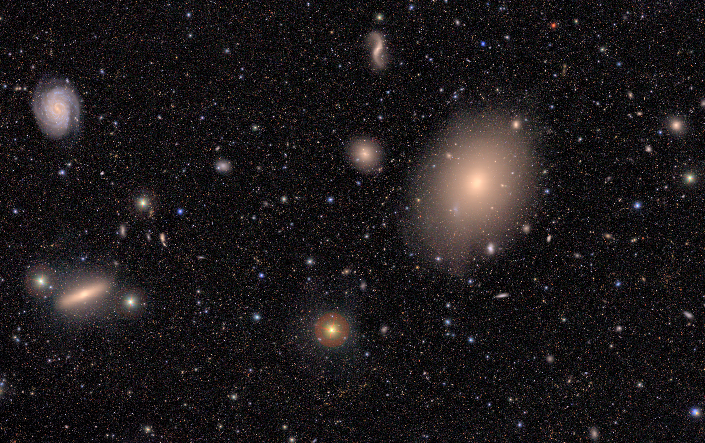
On June 23, 2025, the Vera C. Rubin Observatory in Chile captured its First Light images. This isn't just another telescope; it's a massive 3.2-gigapixel camera that will photograph the entire southern sky every few days for a decade.
The result will be a "time-lapse movie" of the universe, cataloging 20 billion galaxies and mapping the dark matter that holds reality together. We are moving from static snapshots of space to a real-time streaming view.
5. The Oceans Are No Longer Lawless
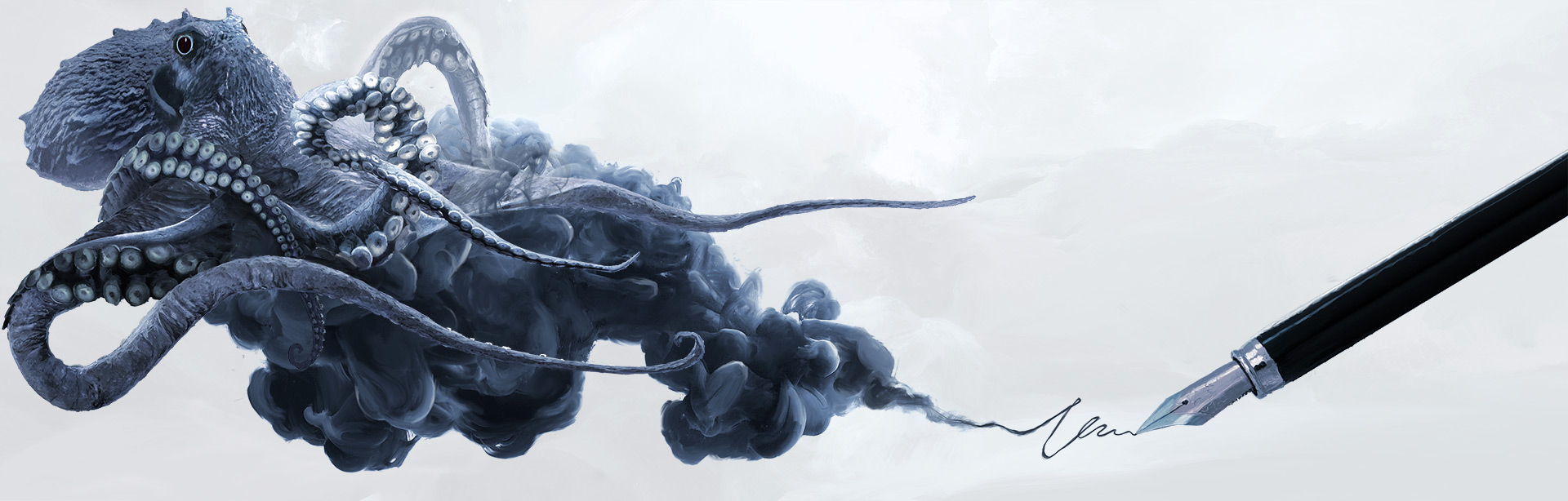
For centuries, the ocean beyond national borders (50% of the planet) was like the Wild West. In September 2025, the High Seas Treaty finally got enough signatures to become law.
This allows us to create massive protected areas in the middle of the ocean, which is critical to protecting marine life. Nature, it seems, is also collaborating: 2025 saw the first confirmed scientific proof of orcas and dolphins working together to hunt, showing that cooperation is a winning strategy for survival.
6. Quantum Computing Got Useful
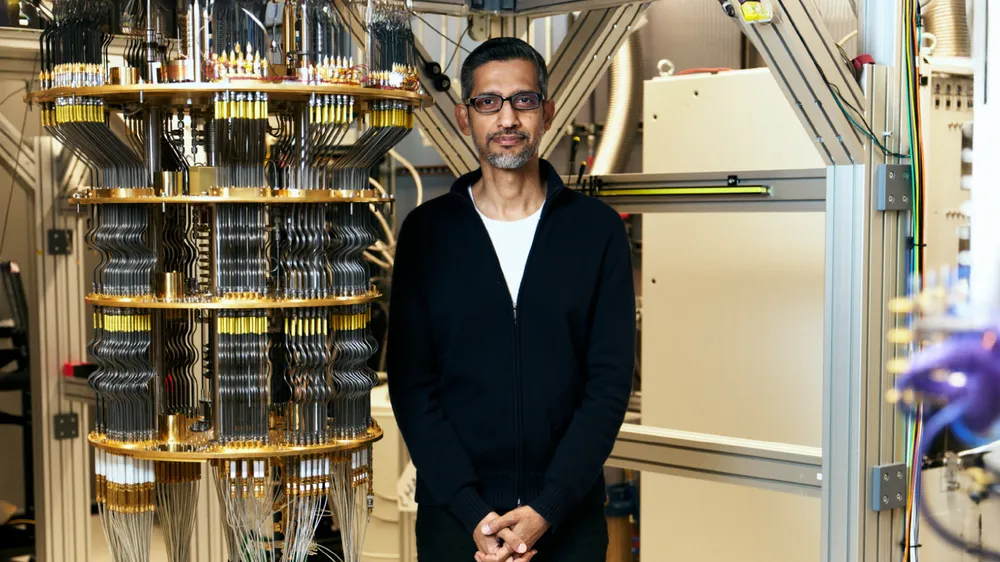
We stopped talking about "Quantum Supremacy" (doing useless things fast) and started seeing "Quantum Utility." Google's Quantum AI team revealed Quantum Echoes, a breakthrough that allows quantum computers to do calculations for chemistry that are actually useful for science.
At the same time, the release of AlphaFold 3 allowed us to predict the structure of all of life's molecules – DNA, RNA, and proteins – compressing years of lab work into minutes of digital simulation.
7. Polio is 99% Gone
In a massive win for public health, the World Health Organization confirmed that global polio cases have dropped by 99% over the last 35 years. Regions like South-East Asia celebrated over a decade of being polio-free, proving that when the world works together on vaccinations, we can wipe out diseases.
8. Peace Deals in the Age of Conflict
Despite the tension in the headlines, 2025 saw the end of some very old conflicts. Armenia and Azerbaijan signed a historic peace agreement, normalizing relations after 30 years of fighting. Similarly, Thailand and Cambodia signed a ceasefire agreement in December to end border skirmishes, proving that diplomacy is still alive.
9. We Can Read Without Glasses Again
It’s a small upgrade, but for billions, it’s magic. The FDA approved VIZZ eye drops, a daily drop that corrects age-related vision loss. It works by shrinking the pupil to create a "pinhole camera" effect, restoring your ability to read up close without needing surgery or reading glasses.
10. The Ozone Hole is Healing
Finally, proof that we can fix the planet. NASA confirmed that the Antarctic ozone hole shrank to its fifth-smallest size in three decades. This is the direct result of the global ban on certain chemicals in the 1980s. It took a generation, but we identified a threat, agreed on a solution, and the planet responded.
The Takeaway:
Progress isn't a straight line, and it rarely makes the front page. But 2025 proved that when we use science, engineering, and teamwork to solve our problems, we don't just survive – we upgrade.
Here is to keeping the momentum in 2026.