


Fasting is often reduced to a simple conversation about weight loss, but viewing it solely through that lens misses the bigger picture. When you stop eating for a prolonged period, you aren't just cutting calories; you are flipping a metabolic switch that activates ancient, dormant survival mechanisms.
For the last few weeks, I’ve been diving deep into the chronobiology of fasting—specifically the profound changes that occur during a 72-hour window. The science is fascinating. From sky-rocketing growth hormone levels to the regeneration of immune stem cells, a 72-hour fast is less about "starving" and more about cellular "pruning" and renewal.
To help you visualize and track these invisible milestones, I’ve also built a new tool: the Fasting Planner. But first, let’s look at the data to understand why you might want to fast in the first place.
The Roadmap: Your Body on a 72-Hour Timeline
Fasting isn't a static state; it's a dynamic journey through distinct physiological stages. Here is the breakdown of what is happening under the hood.
0–4 Hours: The Anabolic Phase

- Status: Fed & Processing. Immediately after your last meal, your body is in an anabolic (growth) state. Insulin levels spike to manage the influx of glucose, and your body is busy digesting and storing energy. Cellular cleaning (autophagy) is turned off because your body is focused on processing new fuel.
12–16 Hours: The Metabolic Switch

- Status: Fat Burning Initiation. This is often the hardest part—the "wall." Your liver's glycogen (stored sugar) is running low. As insulin drops, your body is forced to switch fuel sources, transitioning from burning sugar to burning fat. You might feel "hangry" here due to hormones like ghrelin peaking, but this is the sign that you are becoming metabolically flexible.
24 Hours: Autophagy & Ketosis

- Status: Cellular Cleanup. By the 24-hour mark, you have entered nutritional ketosis. Your brain is now running on ketones (beta-hydroxybutyrate), which often leads to a surge in mental clarity and focus. More importantly, autophagy begins to ramp up. This is your body’s recycling program, where cells identify and break down damaged components and misfolded proteins.
48 Hours: The HGH Surge

- Status: Deep Repair & Muscle Protection. There is a common myth that fasting burns muscle. The science suggests otherwise. Around the 48-hour mark, your body fights to preserve lean tissue by triggering a massive surge in Human Growth Hormone (HGH). Recent 2025 studies have shown HGH increases of up to 1,225% during water-only fasting. This hormonal shield protects your muscles while your body aggressively targets fat stores for energy.
72 Hours: Immune System Regeneration

- Status: Stem Cell Activation. This is the "Holy Grail" of prolonged fasting. Research led by Dr. Valter Longo indicates that by 72 hours, the body breaks down old, inefficient immune cells to save energy. This depletion lowers PKA and IGF-1 levels, which signals your bone marrow stem cells to wake up. When you eventually break your fast, these stem cells proliferate, effectively rebuilding a younger, more resilient immune system.
Stop Guessing, Start Planning
Understanding these stages is one thing; tracking them in real-time is another. I realized that most fasting apps are either too cluttered with ads or lack the granular data I wanted to see. I needed a tool that was clean, easy to use, and visually intuitive.
So, I built Fasting Planner.
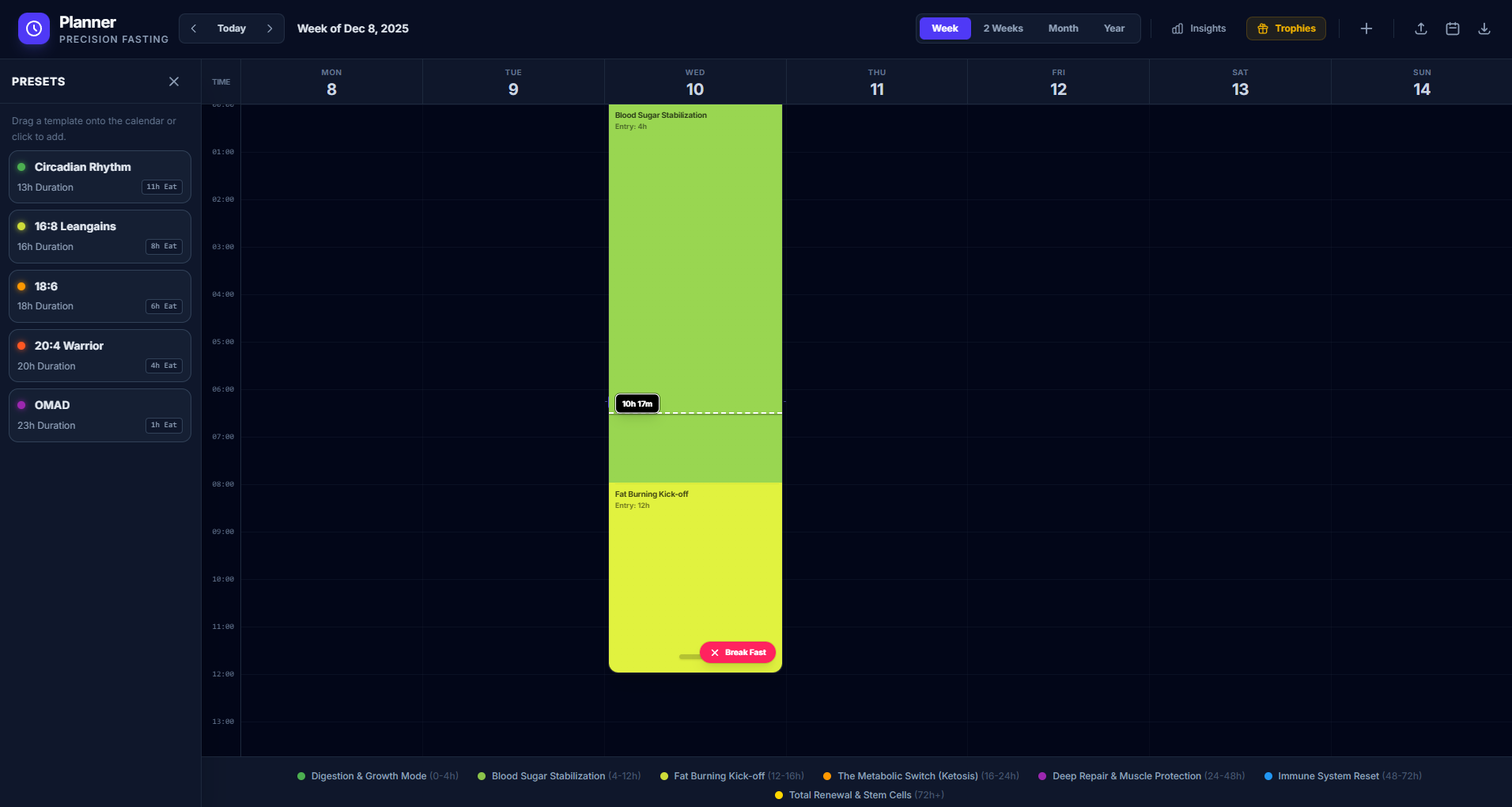
It is a dedicated tool designed to help you architect your fasting protocols with precision.
Key Features:
- Real-Time Stage Tracking: Know exactly which metabolic phase you are in—whether you are in the "HGH Surge" or entering "Deep Ketosis."
- Visual Calendar: Plan your fasts weeks or months in advance using a user-friendly drag-and-drop calendar interface.
- Weight & Progress Tracking: Monitor your body’s response over time with integrated weight logging.
- Privacy First: Easily export and import your data. Your health data belongs to you.
Whether you are attempting your first 16:8 intermittent fast or preparing for a therapeutic 72-hour reset, having a visual roadmap makes the discipline much easier to maintain.
Check it out here: fasting-planner.harduex.com
Disclaimer: Fasting for 72 hours is a significant physiological stressor. Always consult with a medical professional before undertaking prolonged fasting, especially if you have underlying health conditions.